Live-Action Integration: Blending VFX Seamlessly
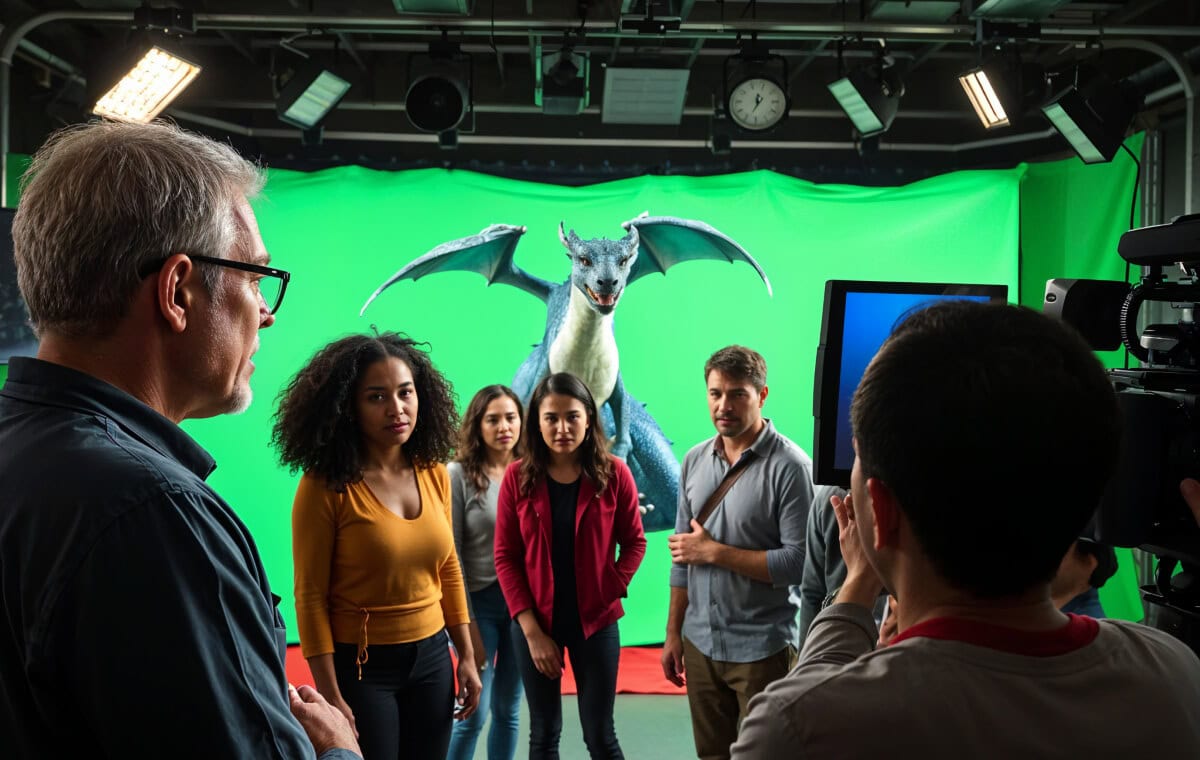
Visual effects (VFX) have transformed the cinematic landscape, turning the impossible into reality on the big screen. From awe-inspiring explosions to fantastical creatures, VFX allows filmmakers to push the boundaries of imagination. But beyond the spectacle, the true magic of VFX lies in its seamless integration with live-action footage. When done well, digital elements blend seamlessly with reality. It becomes nearly impossible to distinguish where one ends and the other begins.
In this article, we’ll explore the intricate art of merging VFX with live-action footage. Whether you’re an aspiring filmmaker or a movie buff, this guide offers valuable insights. It covers the process of creating and integrating stunning visual effects. These effects are designed to captivate audiences.
Understanding Live-Action Integration
What is Live-Action Integration?
At its essence, live-action integration is the art of combining CGI with real-world footage. It creates a cohesive and believable visual experience. For example, it’s like placing a digitally-rendered dragon in a filmed medieval village. The challenge is not just adding digital elements but making them feel naturally part of the real world. It’s akin to adding that perfect final brushstroke to a painting, bringing the entire piece to life.
The Role of VFX in Live-Action
VFX plays a pivotal role in storytelling by creating visuals that transcend the limitations of reality. It enables filmmakers to craft scenes that would otherwise be impossible to achieve. However, the true power of VFX lies in its subtlety. For the audience to be fully immersed, effects must blend seamlessly with live-action footage. When VFX and live-action integrate flawlessly, it transforms a film from good to unforgettable, turning the impossible into a visual masterpiece.
Pre-Production Planning
Importance of Pre-Visualizations
Imagine embarking on a journey without a map—it would be chaotic and unpredictable. The same principle applies to integrating VFX with live-action footage. Pre-visualization (pre-vis) acts as a digital blueprint for your film, allowing you to experiment with visual elements before shooting begins. This process involves creating rough versions of scenes, helping filmmakers visualize how VFX elements will interact with the live-action footage. Pre-vis is crucial for identifying potential issues early on, saving valuable time and resources during production.
Storyboarding for VFX
Storyboards serve as the visual roadmap for your film, outlining each scene and shot in meticulous detail. When working with VFX, storyboarding becomes even more essential. It provides a clear vision of how digital elements will be integrated into live-action shots, ensuring that the director, cinematographer, and VFX artists are all on the same page. By carefully planning each shot, you can minimize surprises during production and streamline the integration process.
On-Set Considerations
Lighting for Seamless Integration
Lighting is one of the most critical factors in achieving seamless VFX integration. To create a believable composite, the lighting conditions of the CGI elements must match those of the live-action footage. If the lighting is inconsistent, the digital elements will stand out, breaking the illusion of reality. On set, careful control of lighting is essential to ensure that CGI and live-action elements blend harmoniously, much like adding the perfect seasoning to a dish.
Camera Techniques for Live-Action and VFX
The camera is the audience’s window into your created world, and its movements and angles are crucial for VFX integration. To maintain realism, camera techniques must be carefully considered. For instance, if a scene is shot with a handheld camera, the VFX must mimic that shaky movement to look natural. Techniques like tracking shots, motion control rigs, and drone footage ensure that VFX elements integrate seamlessly with live-action footage.
Green Screen vs. Real Environments
Green screens are a staple of VFX production, providing a blank canvas onto which digital elements can be inserted. However, filming in real environments can sometimes offer a more organic feel, especially when subtle environmental details are crucial to the scene’s realism. The choice between green screen and real environments depends on the specific needs of the scene. For example, a fantastical setting might benefit from a green screen, allowing for greater creative freedom, while a simple environmental extension may be better achieved through on-location shooting.
Blending VFX with Filmed Footage
Matching Color and Lighting
The camera is the audience’s window into your created world, and its movements and angles are crucial for VFX integration. To maintain realism, camera techniques must be carefully considered. For instance, if a scene is shot with a handheld camera, the VFX must mimic that shaky movement to look natural. Techniques like tracking shots, motion control rigs, and drone footage ensure that VFX elements integrate seamlessly with live-action footage.
Using Motion Tracking
Motion tracking is the process of analyzing the movement of the camera and objects within a scene, allowing CGI elements to move in perfect sync with the live-action footage. It’s like choreographing a dance between the real and the digital. Without accurate motion tracking, CGI elements can appear disconnected from the scene, disrupting the audience’s suspension of disbelief. By precisely tracking motion, VFX artists ensure that digital elements feel anchored in the physical world.
Compositing Techniques
Compositing is where the magic happens, blending digital and real elements to create the final image. This process involves layering VFX over live-action footage and merging them seamlessly. Advanced techniques enable the integration of multiple layers, such as smoke, dust, and lighting effects, to craft a dynamic and realistic scene. It’s like assembling a collage, where each piece must be carefully placed to form a cohesive whole.
Realism in VFX
Creating Natural Movements
Achieving realism in CGI is heavily dependent on movement. Whether it’s a CGI character or object, the way it moves can make or break the illusion. VFX artists study real-world movements and apply these principles to digital elements, ensuring natural movement within the live-action environment. For example, a creature’s tail sway or the flutter of leaves must feel authentic to maintain audience immersion in the scene.
Adding Realistic Textures and Details
The devil is in the details, and in VFX, textures and fine details make digital elements stand out. Whether it’s the rough texture of a dragon’s scales or the intricate patterns on an alien spacecraft, these details are crucial for making CGI elements feel tangible. VFX artists use high-resolution textures and detailed modeling to achieve realism, ensuring every pixel enhances the scene’s believability.
Sound and Visual Integration
Enhancing VFX with Sound Design
Sound design is the unsung hero of VFX integration. Much like the bassline in a song, it might not always be at the forefront of your attention, but it’s essential to the overall experience. Sound enhances the impact of visual effects, making them feel more immersive. Whether it’s the roar of a dragon, the crackle of electricity, or the subtle hum of a futuristic vehicle, sound design plays a crucial role in grounding the visual effects in reality, creating a multisensory experience for the audience.
Syncing Audio with Visuals
Properly syncing audio with visuals is critical for maintaining the illusion of reality. Imagine a film where an explosion’s sound is delayed by a few seconds—it would shatter immersion. VFX artists and sound designers collaborate to ensure every audio cue matches the visual effects perfectly, creating a cohesive experience that immerses the audience in the story.
Post-Production Challenges
Common Pitfalls in VFX Integration
Even the most skilled VFX artists can encounter challenges during post-production. One common pitfall is the “uncanny valley” effect, where digital characters or elements appear almost real, but not quite, leading to a sense of unease in the audience. This can be avoided by focusing on the finer details, such as eye movements, skin textures, and natural lighting, which contribute to a more convincing and relatable digital character.
How to Avoid the ‘Uncanny Valley’ Effect
Navigating the uncanny valley is like walking a tightrope—one misstep and the illusion is shattered. To avoid this, VFX artists must pay close attention to the subtleties of human or creature expressions, movements, and interactions. By studying real-life references and meticulously applying them to digital elements, VFX artists can bridge the gap between reality and fiction, creating characters and scenes that feel authentic and engaging.
Case Studies: Successful Live-Action VFX Integration
‘The Avengers’ and Its Seamless VFX
Marvel’s The Avengers is a masterclass in seamless VFX integration. From the Hulk’s towering presence to Iron Man’s intricate suit, every digital element is crafted with meticulous attention to detail, ensuring that it blends perfectly with the live-action footage. The film’s success lies in its commitment to realism, with VFX artists painstakingly matching lighting, movement, and textures to create a cohesive visual experience that draws the audience into its world.
‘Avatar’: Blurring the Lines Between Reality and VFX
James Cameron’s Avatar set a new standard for live-action integration by creating an entire world where the lines between reality and VFX are almost indistinguishable. The film’s groundbreaking use of motion capture technology allowed for incredibly lifelike CGI characters, while its attention to environmental detail ensured that every scene felt tangible and immersive. Avatar is a prime example of how VFX, when done right, can transcend the screen and create a fully realized world that captivates audiences.
Conclusion
Seamless integration of VFX with live-action footage is an art form that requires meticulous planning, technical expertise, and a deep understanding of both the digital and physical worlds. It’s a collaborative process that involves directors, cinematographers, VFX artists, and sound designers all working together to create a cohesive visual experience. When executed flawlessly, VFX integration not only enhances the storytelling but also elevates the film to new heights, leaving a lasting impression on the audience.
As you embark on your journey into the world of VFX and live-action integration, remember that the magic lies in the details. Whether you’re crafting a fantastical creature or simply adding subtle environmental effects, the goal is to make your audience believe that what they’re seeing is real. And when you achieve that seamless blend of VFX and live-action, you’ll have created something truly extraordinary.